
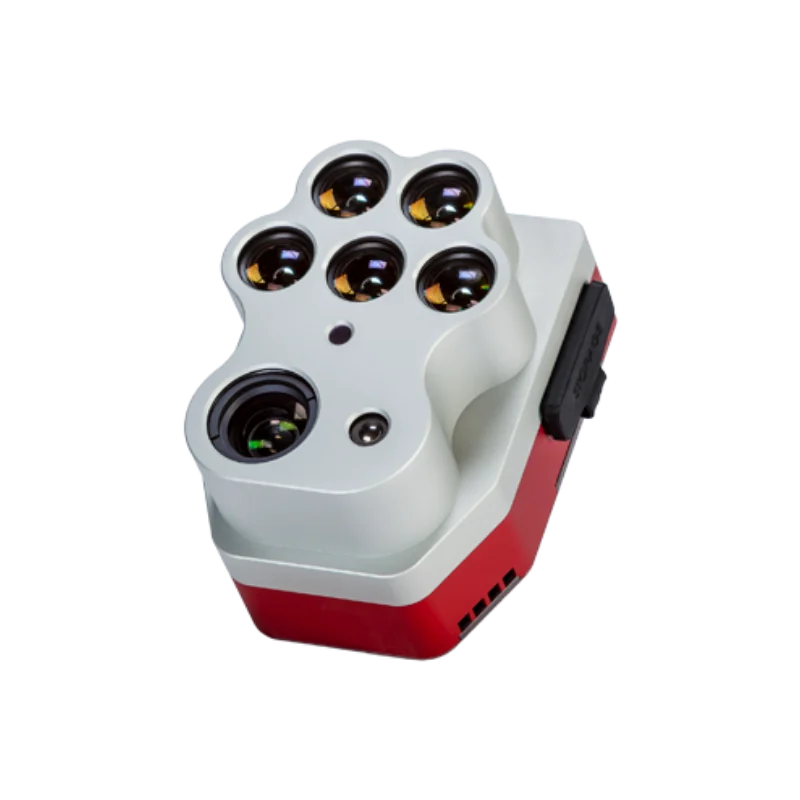
MicaSense Altum-PT — Multispectral, Thermal & Panchromatic Imaging

Combine Vegetation Analysis with Thermal Information

Synchronised spectral and radiometric thermal observations for agricultural, environmental and irrigation research.

Altum-PT integrates five multispectral bands, a high-resolution panchromatic sensor and a 320 × 256 FLIR Boson radiometric thermal camera. Users can compare vegetation reflectance and surface-temperature patterns from the same survey while retaining the different native resolutions of each output.

Technical content updated 17 November 2026 · checked against official manufacturer sources
MicaSense Altum-PT multispectral panchromatic and radiometric thermal drone camera
Altum-PT integrated multispectral and thermal hardware. Official manufacturer reference image.
05 + PANmultispectral + panchromatic
320 × 256radiometric thermal array
≈1.25 CMpan-sharpened GSD at 60 m
≈17 CMthermal GSD at 60 m

Altum-PT specifications and workflow context

Manufacturer specifications are shown with their acquisition or processing conditions. Confirm the current configuration and intended outputs before procurement.

01
Multispectral imaging

5 global-shutter bands

Confirm the current band table for the supplied configuration
02
Panchromatic sensor

12.4 MP

Manufacturer current published specification
03
Thermal sensor

FLIR Boson 320 × 256 radiometric thermal

04
Published pan-sharpened GSD

Approximately 1.25 cm/pixel at 60 m AGL

05
Published thermal GSD

Approximately 17 cm/pixel at 60 m AGL

Different native output from pan-sharpened imagery
06
Capture rate

Up to 2 captures/second

Configuration and operating conditions apply
07
Radiometric workflow

DLS 2 + calibrated reflectance panel

Specify the output before the payload.

Adds integrated radiometric thermal capture to a high-resolution multispectral system.

Agricultural and environmental teams that need both multispectral reflectance and radiometric thermal information and can control the acquisition conditions needed for interpretation.

Review the intended configuration

What changes in the field and in processing.

The practical reasons to choose Altum-PT, with the integration and interpretation boundaries kept visible.

01

01 / SYNCHRONISED OBSERVATIONS

Compare reflectance and temperature without treating them as the same measurement.

Multispectral bands measure reflected light in selected wavelengths; the thermal sensor measures emitted thermal infrared radiation for radiometric surface-temperature analysis. Their spatial patterns can be complementary when acquisition and alignment are controlled.

  • Use spectral indices to examine vegetation reflectance
  • Use thermal data to investigate surface-temperature patterns
  • Compare both with field observations and environmental conditions
02

02 / RESOLUTION DISTINCTION

Pan-sharpened and thermal outputs have different native detail.

At approximately 60 m above ground level, the manufacturer publishes about 1.25 cm/pixel for pan-sharpened imagery and 17 cm/pixel for thermal imagery. The thermal output must not be represented as if it inherits the panchromatic sensor’s spatial detail.

  • Plan flight height around the coarsest critical measurement
  • Inspect thermal and multispectral alignment
  • State output type and native resolution in deliverables
03

03 / THERMAL INTERPRETATION

Temperature patterns require environmental context.

Radiometric thermal measurements are affected by sensor performance, emissivity, weather, viewing geometry and acquisition practice. A warm or cool anomaly is not direct soil-moisture measurement and does not by itself identify an irrigation fault or pipe leak.

  • Record acquisition time and relevant weather conditions
  • Use consistent methods for repeat comparison
  • Validate anomalies with ground or operational evidence

Where this sensor can contribute.

Representative application contexts, not claimed Easepect customer outcomes. Suitability depends on the target, acquisition design, processing method and validation.

01

Irrigation research

Investigate spatial temperature and reflectance variation alongside irrigation records and field checks.

Discuss this application
02

Crop water-stress studies

Compare canopy spectral and thermal responses within a designed monitoring method.

Discuss this application
03

Environmental monitoring

Examine vegetation and surface-temperature patterns across managed or natural landscapes.

Discuss this application
04

Agricultural phenotyping

Combine spectral and thermal traits with plot-level observations in research programmes.

Discuss this application

Who should consider Altum-PT?

Agricultural and environmental teams that need both multispectral reflectance and radiometric thermal information and can control the acquisition conditions needed for interpretation.

Thermal imagery is not a direct soil-moisture or pipe-leak measurement. Water-stress assessment and irrigation conclusions require supporting observations; spectral and thermal anomalies do not independently establish cause.

Questions to resolve before selecting Altum-PT.

Altum-PT adds an integrated 320 × 256 radiometric thermal sensor to multispectral and panchromatic imaging. RedEdge-P does not provide integrated thermal measurement.

Verify the exact camera and processing configuration.

Manufacturer and channel imagery illustrates the referenced hardware. Supply scope, price, stock, warranty and availability are confirmed separately.

Specify Altum-PT around the outputs you actually need.

Share the application, drone platform, project area, required data products and timeline. Easepect can discuss the current configuration, technical demonstration, integration and training without assuming universal software support or project results.