
SOLUTIONS / CONTROLLED DEPLOYMENT
Offline Photogrammetry and Controlled Geospatial Workflows
Design local processing and disconnected viewing around the organisation’s actual network, licensing and data-handling constraints—not a generic “offline” label.
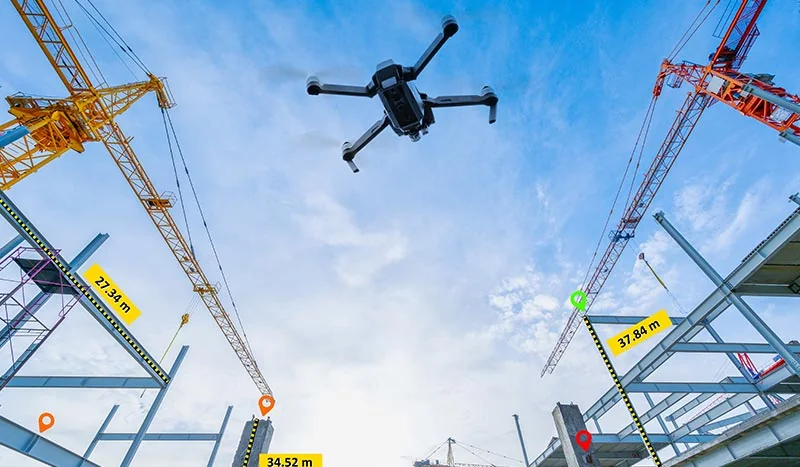
Source evidence, configuration and quality context remain attached through handover.
01 / PRACTICAL OVERVIEW
Where Offline Photogrammetry fits in the working system.
Restricted engineering facilities, sensitive infrastructure and private networks may require tighter control over connectivity and infrastructure ownership. PhotoMesh and relevant Skyline applications can form part of locally deployed workflows using compatible hardware and licences.
TerraExplorer also supports suitable offline project kits for disconnected viewing. Neither capability automatically establishes classified-use certification, permanent air-gap operation or compliance with a particular security policy.
03 / TEN-PART ASSESSMENT
What a credible controlled deployment must answer.
- 01 / Installation and activation
- Identify every installer, activation step and external service dependency.
- 02 / Licensing and renewals
- Confirm licence method, renewal behaviour and offline administration with the manufacturer.
- 03 / Hardware and GPU
- Size processing, graphics, memory and storage for representative data.
- 04 / Processing architecture
- Define workstation, local workers, shared storage and network paths.
- 05 / Terrain and basemaps
- Provide approved local reference data instead of assuming online maps remain available.
- 06 / Offline export formats
- Test project kits and supported content on the intended disconnected clients.
- 07 / Local data storage
- Control source, intermediate, cache, output and backup locations.
- 08 / Security and dependencies
- Review endpoints, services, accounts and permitted external connections.
- 09 / Updates and patches
- Establish an approved route for assessment, transfer and installation of updates.
- 10 / Handover and support
- Document administrators, diagnostics, escalation and recovery procedures.
04 / APPLICATIONS
Where a controlled architecture may be considered.
Restricted engineering facilities
Keep production within an approved technical environment.
Sensitive infrastructure
Limit data movement and exposure according to the asset owner’s rules.
Private enterprise networks
Integrate with existing identity, storage and IT administration.
Controlled government environments
Assess each requirement formally rather than assuming product clearance.
Disconnected field operations
Prepare approved content and synchronisation procedures in advance.
Data-residency requirements
Confirm storage, processing and support paths against contractual obligations.
05 / EASEPECT’S ROLE
Begin with constraints, not a product promise.
Easepect can facilitate a technical discovery covering the proposed local-processing and viewing workflow. High-level requirements are sufficient for an initial conversation; do not submit sensitive site information, credentials or restricted network diagrams through the general enquiry form.
The output of evaluation should be an assessed component and dependency list, a test plan and clear operating responsibilities. Any formal security acceptance remains with the client’s authorised process.
06 / FREQUENTLY ASKED QUESTIONS
Questions about Offline Photogrammetry.
Local PhotoMesh processing and suitable TerraExplorer offline project kits can support disconnected parts of a workflow. Activation, licence renewal, reference data, updates and every external dependency must be assessed for the exact version and deployment.
Not automatically. A local installation may still require activation, updates, licence services or online reference content. Only a documented dependency review can establish what disconnected operation is supportable.
LOCAL IMPLEMENTATION / SINGAPORE
Define the operating workflow before choosing the licence.
Share your application, approximate data volume and user responsibilities. Easepect can help scope product supply, demonstrations, deployment, integration and training.